
Dipping into Michigan Bean Commission History
Thanks to the beloved Beans Bunny that used to grace Saginaw’s skyline, locals are no strangers to the importance of beans to Michigan’s agricultural industry. We have shared the Michigan Bean story before, so today we are going to briefly look at a state institution centered right here in Saginaw County - the Michigan Bean Commission.
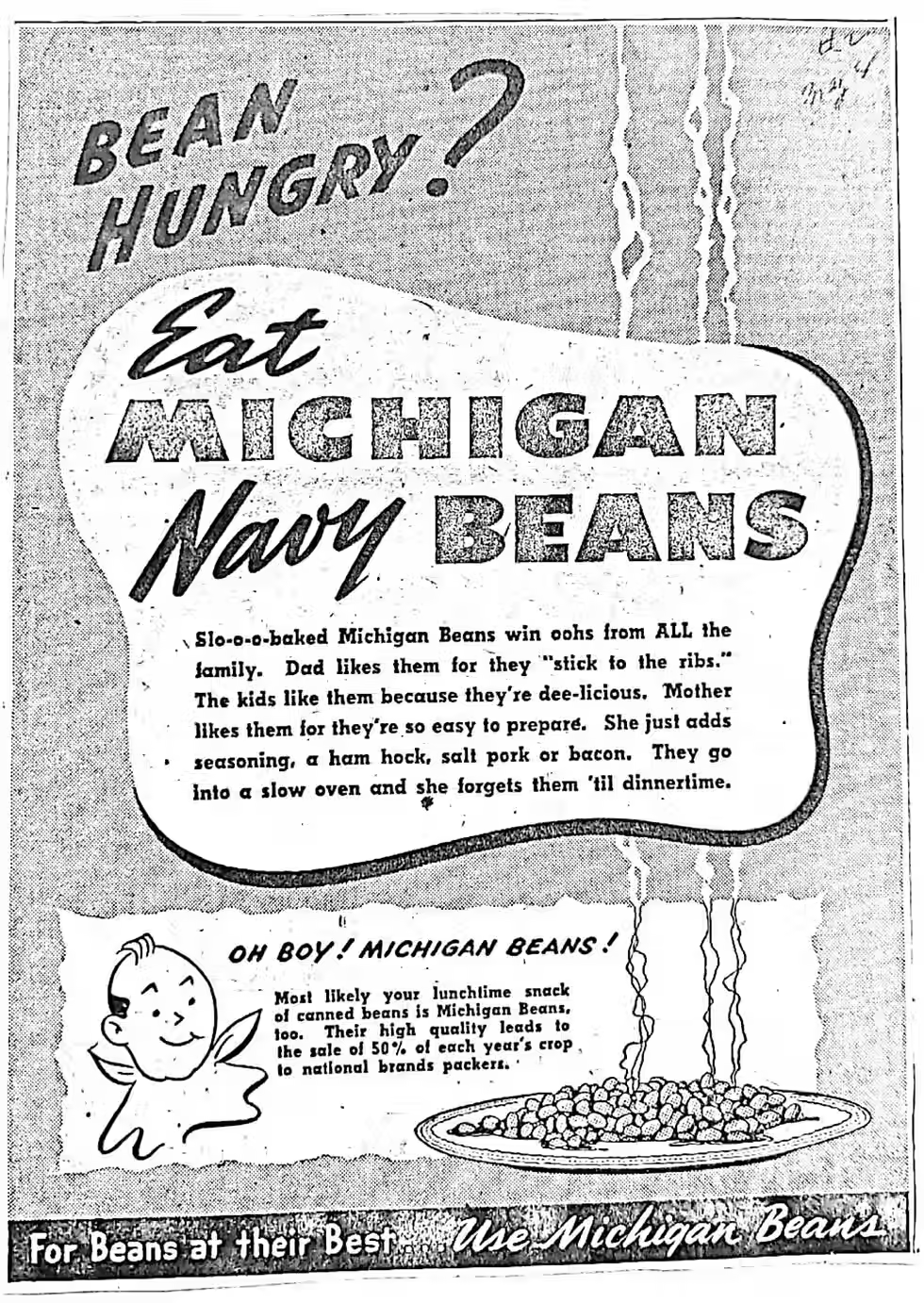
The Michigan Bean Commission was formed by an act of the state legislature in 1965, with the first governor-appointed commission seated in 1966. Act 114 of 1965 specifies there are to be nine voting members consisting of a grower from each district, one member at large, and one processor, shipper, handler member. The Act also states that the director and dean of the Michigan State University College of Agriculture and Natural Resources (or their designees) are ex officio members without vote.
According to The Saginaw News, Michigan Rep. Sanford E. Charron of Pinconning sponsored the bill to create the commission. “The bill is designed to promote research and development markets for Michigan’s dry, edible beans,” he said. (“Bean Producers Get Added Time,” Saginaw News, April 23, 1965).

Michigan already had other agricultural commissions at that time, including apple, cherry, and potato commissions. To highlight that beans were equally important, Charron noted that in 1964, “Michigan harvested nearly 7.5 million hundredweight of dry beans with a valuation of $54 million. The state produced nearly the entire national crop of navy beans, as well as a substantial share of kidney beans, cranberry beans, and yelloweye beans.”
Today, the Michigan Bean Commission notes Michigan’s eight varieties of beans, which are black beans, dark red kidney beans, light red kidney beans, small red beans, cranberry beans, pinto beans, white kidney beans (cannelli), and navy beans.
Over the years, as a way to promote beans, the Michigan Bean Commission has regularly produced cookbooks and other educational materials. The Castle Test Kitchen got its hands on one such cookbook, that although not dated, appears to be c. 1980s.
This Castle Kitchen tester has the upcoming Member Appreciation event - Only Murders in the Museum - on her mind, and fans of the streaming series know that Martin Short’s character Oliver Putnam famously prefers a dip-based diet. So, despite the fear of canned deviled ham, we had to try …
The Recipe: Hot Time Spread


1 can (1 lb.) baked beans in tomato sauce
1 can (7 oz) deviled ham
1 ½ tablespoons horseradish
1 tablespoon Worcestershire sauce
Generous dash of hot pepper sauce
½ medium onion, finely chopped
Combine all ingredients in blender jar. Whirl until smooth. Remove to serving dish and chill.
Variation: Add about ½ cup cooked crumbled bacon in place of deviled ham.
Makes about 3 cups.
Caste Tasting Notes: This wasn’t really hot. Maybe we could have kept getting more generous with the hot sauce, but the dominant flavor was tomato from the beans. Nice texture, and once blended in, the deviled ham seemed to disappear entirely.
Starting with Dry Beans
Our selected recipe allowed us the advantage of canned beans, but many of the recipes in the Michigan Bean Commission cookbook start with dry beans. There is a traditional overnight soaking method for bean prep, however, all of the recipes included in the cookbook suggest the Quick-soak method.
So for those burning with a desire to start with dry beans, here is the quick-soak:
Wash and sort beans; place in large saucepan with 6 cups of water per pound of beans. Bring to a boil and cook 2 minutes. Remove from heat, cover, and let stand for 1 hour.
After using this method, whatever recipe you choose with its add-ins and seasonings will require about 2 hours of simmering time for the beans to become tender.


