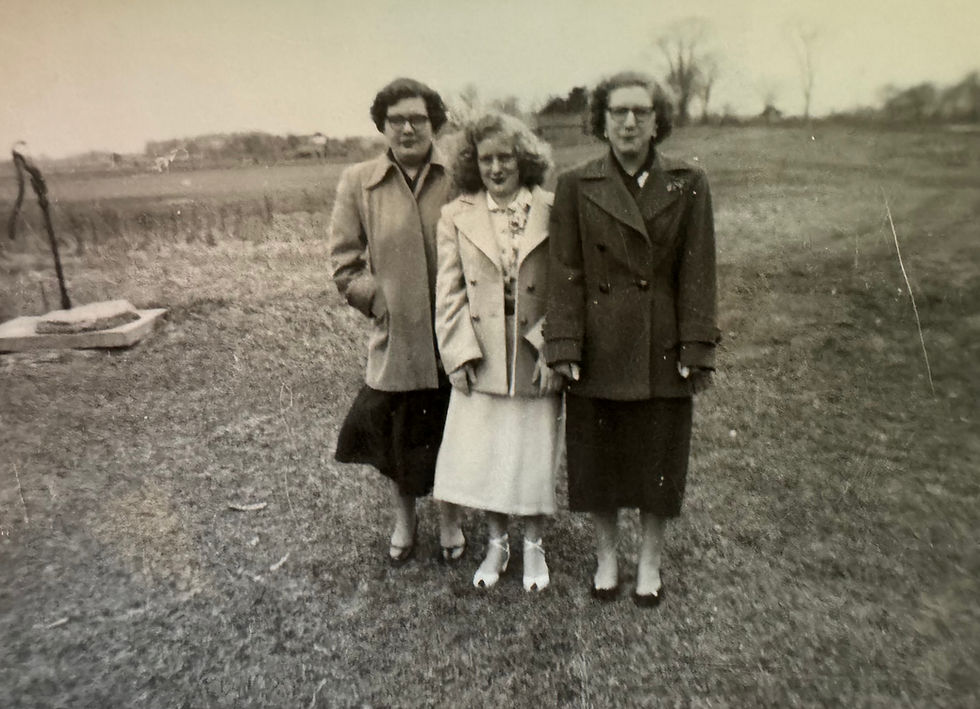
Rooted in Unity: The Story of Saginaw’s African Cultural Celebration
- Feb 22
- 4 min read
In Saginaw County, traditions that nourish the spirit often begin around a shared table—food, art, music, and conversation blending into something lasting. Few examples capture that spirit better than the Saginaw African Cultural Festival, the oldest ongoing Black arts festival in the country.

The festival’s roots stretch back to February 14, 1969, when the Inner City Arts Exhibit (ICAE) opened in the old St. Rita’s building on Narloch Street for a single-day event. ICAE was a joint project between grassroots activists in Unite Power and staff from the Community Action Committee.
The two groups came from different perspectives—Black Power activism on one side, professional community services on the other—but they shared a powerful goal: raising awareness and pride within the African American community while educating the wider public. Setting aside their differences, they forged an “operational unity,” proving that collaboration could transform ideas into action.
ICAE was more than an exhibit. It was a declaration that art could heal, inspire, and build community.
Artists Organize, Traditions Grow

The following year, ICAE artists formed the Sphinx Artist Guild, recognizing that organization and cooperation were essential for long-term change. Around the same time, Unite Power evolved into the Poverty Peoples Alliance, focusing on addressing challenges within the Black community.
By 1972, the Umoja Arts Council took the lead, shaping what had begun as a single exhibit into an annual Black Arts Festival. Over the decades, an evolving group of volunteers nurtured the event, turning it into a beloved community institution.
In 1989, the festival’s name changed to the Saginaw African Cultural Festival. The shift reflected a deeper emphasis on African roots—honoring Africa as a place of origin, a historical reference point, and a cultural foundation. Alongside African American art and music, the festival expanded to include African history, artifacts, and vendors offering traditional goods.
The goal remained simple and profound: everyone should have the chance to experience African culture and history.

For years, the festival found a welcoming home at Morley Elementary School and park, thanks to the generosity of the Saginaw Public School District. Former Morley Principal Charles McNair, one of the festival’s elders and founders, helped ensure the space was available so the celebration could grow. While the Morley Elementary School was demolished in 2005, the festival continues to take place on the grounds.
“'Mr. McNair was our inspirational leader and even when he could not stay at the festival three whole days, he was there for us emotionally,'” said Karen Lawrence-Webster on behalf of the Saginaw African Cultural Festival committee” (MLive, December 6, 2019).
Like many gatherings rooted in food, art, and shared heritage, the festival became a place to reconnect—with history, with neighbors, and with culture.
A Continuing Story
What began in 1969 as a modest exhibit now stands as a vibrant tradition—proof that when a community cooks up creativity, unity, and pride, the results can nourish generations.
The Saginaw African Cultural Festival continues to remind us that culture is something we share, celebrate, and pass on—together.





This year’s African Cultural Festival is coming up on August 14-16, 2026, at 2601 Lapeer (former Morley School grounds). Make sure you save the date and follow their Facebook Page for a complete schedule.
The Recipe: Ghanaian Spinach Stew with Sweet Plantains
In honor of Saginaw’s African Cultural Festival, the Castle Test Kitchen looked for a traditional African dish. We’d like to give a special note of thanks to our friend Nana Kwame Akowuah and his wife, Ivy, for sharing this recipe for Spinach Stew from Ghana.


Ingredients:
1/2 C. vegetable oil
1 medium red onion, chopped
4 cloves garlic, minced
3 T. minced ginger
1 habanero chile, seeds & ribs removed, minced*
Kosher salt
1 T. tomato paste
2.5 lbs. plum tomatoes, chopped**
3/4 cup raw shelled pumpkin seeds
2.5 t. smoked paprika
fish sauce
1 pound spinach, washed, dried & roughly chopped
3 large sweet (yellow) plantains, peeled and boiled in salted water until just tender
Directions:
In a Dutch oven, warm the oil over medium heat, add onions, garlic, ginger, chile and some salt. Cook, stirring frequently, until onions are golden and sweet, about 15 minutes.

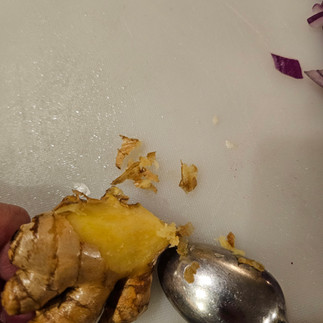


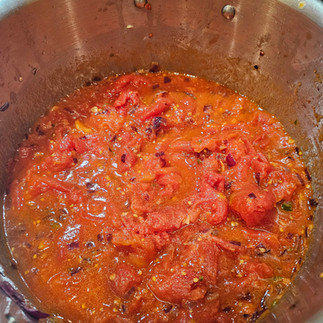
Stir in tomato paste, and cook for 3 minutes. Add the tomatoes and a few generous pinches of salt. Bring to a boil, lower the heat to a simmer and partly cover the pan. Simmer, stirring occasionally, until the sauce has cooked to a rich tomato-soup-like consistency, about 25 minutes.


While the sauce cooks, pulse the pumpkin seeds in a food processor to a fine powder, until it just starts to get clumpy. Remove to a bowl.


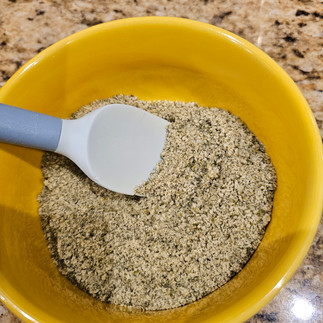
When the tomatoes have reduced, add the paprika and fish sauce to taste. Simmer 2 minutes. Stir in water, a tablespoon at a time, to the bowl of pumpkin seed powder until it is a loose paste. Add it into the pot on top of the tomato sauce, and spread it out. Cover the pan, and cook 5 minutes.


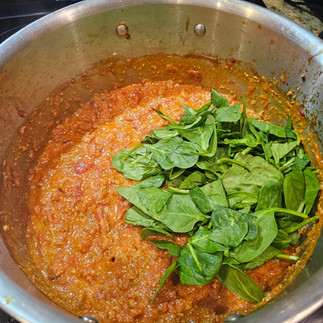
Stir the sauce together; it will look like a thick porridge. Add a few splashes of water, and increase the heat to a boil. Stir in the spinach until wilted and tender. Taste, season with salt (or more fish sauce) and serve with boiled sweet plantains and/or rice.




CTK Notes:
*We were unable to find a habanero, so we substituted a jalapeno pepper.
**Since it's February...in Michigan...we at the CTK assumed that the grocery store tomatoes were probably less than tasty, so we opted to sub whole peeled plum tomatoes instead--2 48-ounce cans, which we crushed, instead of chopping, before adding to the pot. We reserved the juice and added it back in later instead of additional water.