
Heavenrich’s: A Holiday Tradition
“Pastels have the main spot in Heavenrich's Christmas decorative scheme. John W. Ward, display manager, uses white panels with pastel green accents.
‘We get our color effects by using colored flood lights and our accents from spotlights,’ said Ward. ‘Naturally, the brownout* affects our display a great deal. However, the white backgrounds brighten our windows even when we’ve dimmed out.’”
-The Saginaw News, December 1, 1946.


Once, Saginaw was served by numerous locally owned retailers - stores that were known for what they sold and the service they provided. They were businesses that thrived for generations and carried the names of their owners. It was a long list; to name just a few: Morley Brothers, Wiechmann’s, Ippel’s, Seitner’s and - of course - Heavenrich’s. Located on the northeast corner of East Genesee and Franklin, the store was started by Jacob Seligman, better known at Little Jake. Max Heavenrich and his brothers formed a partnership with Seligman and, within a few years, purchased his share of the business.
Max P. Heavenrich, the son of Max Heavenrich, would lead the store for decades. Known for community involvement and philanthropy, Heavenrich had studied engineering at the University of Michigan. However:
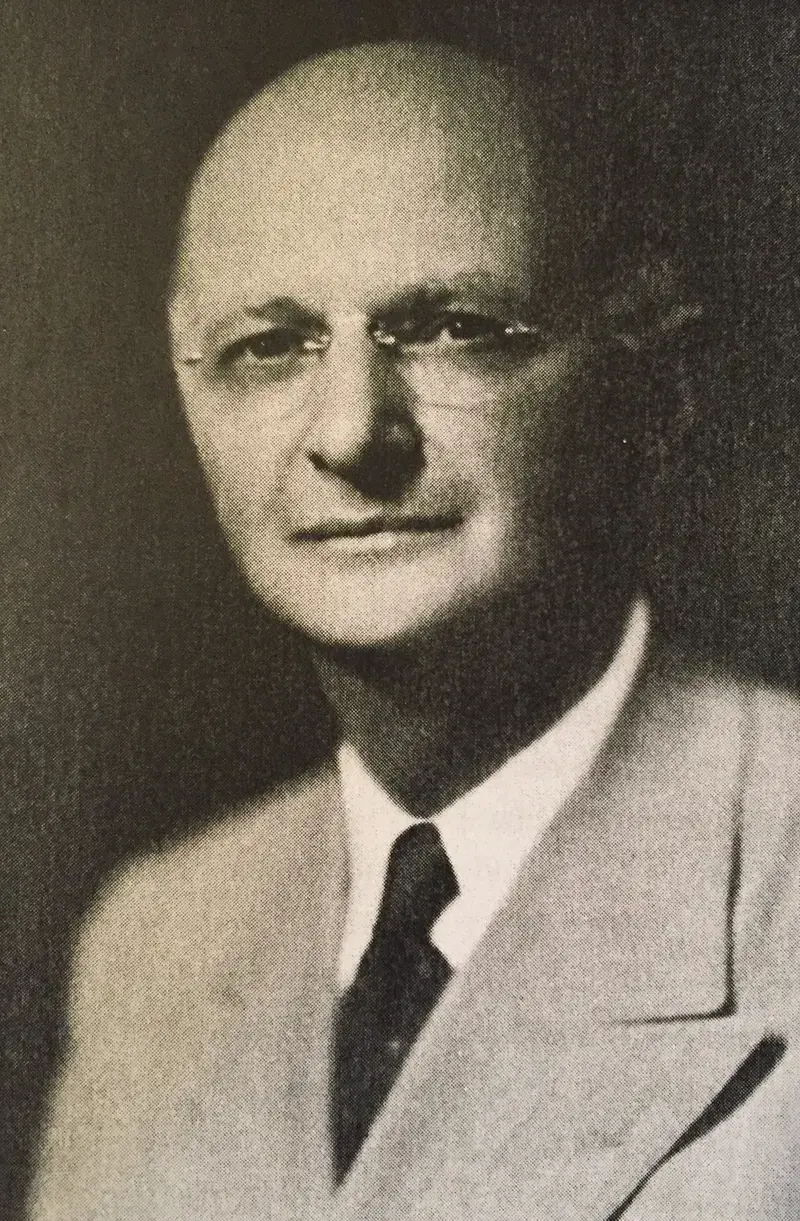
“Returning to Saginaw, he launched into direction of the Heavenrich clothing business, which his father and two uncles had established in Saginaw in 1882. He had given up a promising career in industry to enter the Heavenrich mercantile business. As president of Heavenrich Bros. & Company, Max P. Heavenrich built the firm into a Michigan institution—one that would serve the whole family. And he saw to it that the right sizes were in stock to accommodate the hard-to-fit. He had a deserved reputation as a canny merchandiser. He lived by a philosophy of fair dealing. He thought the dictated, printed advertising word could be effective. But he thought very highly of the value of word-of-mouth approval—that his was a good store in which to spend money for family clothing needs—that you got what you paid for and flim-flam was nowhere around. “ (From the Saginaw Hall of Fame website, For the rest of the entry, visit: Max P. Heavenrich).
In 1908, Heavenrich married Minna Enggass of Detroit. Her commitment to her community was equal to that of her husband. When she passed away in 1963, an editorial in The Saginaw News celebrated her commitment to her community:

“SAGINAW owes a debt of public gratitude to Mrs. Max P. Heavenrich Sr., who died, Sunday. In her death, the city has lost one of its most active and fruitful civic workers. With a knack for organization and the ability to inspire others, she devoted her energies to the Visiting Nurses Association, which she established, the Saginaw Society for Crippled Children, which she also helped to establish, the Children's Home, the Red Cross, Saginaw General Hospital, the Children's Free Ward of St. Mary's Hospital, and other worthwhile civic betterment institutions. Withal, she proved an able helpmate to her husband, the late Max P. Heavenrich, in his outstanding career as businessman and civic leader, and was a devoted homemaker for her children, all of whom have distinguished themselves in their own right.
Saginaw is a better place in which to live today because Minna Heavenrich gave so much of her time and effort to make it so. The city mourns the loss of a fine community benefactor.
Those left behind her to carry on the activities of the many organizations for which she labored could make no finer resolve than to make them as productive in civic betterment as she wanted them to be.” (The Saginaw News, August 13, 1963.)
The Recipe: Mrs. Max P. Heavenrich’s Cheese Mould for Salad

One lb. Cottage cheese, salt and paprika, 1 teaspoon chives or ½ teaspoon grated onion, 1 teaspoon green pepper, 1 teaspoon radishes chopped, ½ pint cream, whipped, 1 tablespoon gelatine. Rub cottage cheese until smooth, season with salt and paprika, Dissolve gelatine in a little cold water and beat until light. Add chopped peppers, chives, radishes and whipped cream. Place in mould and let stand several hours to harden. Serve with oil mayonnaise and any desired fruit salad.
-Mrs. M.P. Heavenrich
(From the 1929 edition of the Saginaw Cook Book)
CTK Interpretation:

1 lb. cottage cheese (we used small curd)
½ t. salt
paprika to taste
½ t. grated onion
1 t. grated green pepper
1 t. radishes, chopped fine
½ pint heavy cream, whipped to stiff peaks
1 T. unflavored gelatin
Directions:
Pass cottage cheese through a fine mesh sieve using a rubber spatula until curds are smooth.* Add seasonings, onion, pepper and radishes. Stir to combine. Soften gelatin in about a quarter cup of water until absorbed. Add to cheese mixture. Fold in whipped cream. Place in small, well-oiled mould. Place in fridge to harden (preferably overnight). Serve with crackers.

Notes:
* By smoothing out the curds, the texture became more similar to ricotta. We would suspect ricotta or even softened cream cheese could be used as a replacement in this dish.
--This cheese mould was absolutely delicious and reminded us of a whipped vegetable cream cheese taste that you might serve on bagels—you could use this for the same.
--Our research failed us in finding a proper fruit salad to serve with this savory mould—we opted to forgo all fruit, instead garnishing with radish roses and rosemary sprigs. Without the fruit, we also left off the mayonnaise.
--This mould does not set up firm. It remains very soft and light in texture—and is spreadable. It would be a great party appetizer.
*An electric “brownout” was an emergency response to the 1946 coal strike.


